Search This Blog

Showing posts with label setting. Show all posts

Confining Your Characters

No one likes feeling trapped and the desire to escape is an intense motivator and speaks to a universal need for safety. Readers root for characters to escape catastrophic or horrific danger. By limiting the psychological or physical boundaries, you increase the boiling point of your story cauldron by making it impossible for your characters to walk away.


There are obvious ways to use physical confinement: remote locations or being trapped inside burning a building, speeding train, or airplane. Characters may have to escape an asylum, a prison, a sinking ship, or a dying planet. At scene level, they may have to overcome other obstacles such as manacles or laser alarm systems or crawl through tight tunnels. Life or death stakes ratchet up the tension. Add a ticking clock, and you’ve escalated the conflict to Thriller level. 

But let's step outside obvious physical limiations to look at a few examples where confinement is psychological. Emotional life and death stakes can be just as effective.

Dick might need to escape from a confining belief system, societal rules, or cult. This type of conflict fuels many dystopian and Science Fiction plot lines. It also works in literary and coming of age stories. She might literally have to escape to save her life or the lives of others.

Sally can be confined by a family, a tribe, or a gang. The situation can be an abusive or an intolerable person she needs to flee from.  She may simply need to escape to pursue the career she loves or marry the man of her dreams.

Confinement can force a character to deal with a person or situation because they can’t escape from them.

Dick can feel trapped in an airplane seat. Add an obnoxious rowmate and his discomfort increases. Replace the obnoxious stranger with an angry spouse and your characters are strapped in for a few hours of heated debate or icy silence.

Being confined in a car can have the same effect. Characters often have intense and important conversations while strapped inside. Being confined in a train, elevator, or waiting room can provide Dick with ample time to think something through as well.


Dick might want to break free of romantic relationship or marriage. Depending on his personality type and childhood wounds, he might find commitment suffocating. It can be as simple as Dick not liking that his romantic options have narrowed or been eliminated, so he refuses to propose to a girl he loves. He’ll live with her but he doesn’t like the prison bars that marriage suggests. 

If Jane sees marriage as a desirable bond, a sign that Dick values their relationship and promises to always have her back, she won’t understand his reluctance. This provides terrific tension in a romance or romantic subplot. Dick and Jane, as well as the supporting cast, can argue whether marriage entraps or frees them. Dick can overcome his internal resistance and give in. Dick and Jane can agree that their commitment to each other is more important than the piece of paper. Or, their differing belief systems and needs are a deal breaker and they end the relationship.

Sally might want to break free of a confining friendship. If Sally is the type of easy-breezy personality that loves to be around lots of people and considers twenty people her best friend, she might befriend Jane who values one tight, soul-sister over lesser acquaintances. Confine these two in an apartment or a college dorm and the conflict increases. Whether physically confined or emotionally confined, their differing needs and definitions of loyalty and trust provide obstacles to continuing their friendship. It can be explored in a sweet literary story about why friendships fail. Jane could cause problems for Sally, the protagonist, in other genres as Sally negotiates her exacting friend’s emotional neediness while solving an unrelated story problem. This claustrophobic dynamic has been explored in horror films about scary roommates, but it can also factor in virtually any plot line. Pairing friends with differing connection needs creates believable conflict.

Jane might want to escape a confining job. She may be afraid to leave a lucrative career but imprisoned by the monotony or lack of challenge. She may love the job but hate her boss or coworkers. The entrapment will either force to her make a life changing career move or renegotiate her reality within the confines of her job.

Family get togethers are rarely the love-fests featured in the sweet family stories of long ago. Reunions are hot beds of festering unmet needs and resentments. Personalities clash and clang and grate, fomenting snide remarks and truth-revealing tirades. The quickest way to exit an undesirable family event is for your character to make statements they know will stir the family pot and storm out during the ensuing verbal brawl. An investigator might stir the pot to get a suspect to reveal himself. 

If going home feels like entering a prison, Jane isn’t going to enjoy going there for a holiday meal, much less a week. She may be forced to return home to take care of an ailing parent. The situation makes her feel like she is being strangled, particularly if irritating siblings insist on visiting. Emotional bombs will burst.

Setting and situation choices can force your character to make decisions or take actions they otherwise would ignore. As the character's social, psychological, or physical noose tightens, the reader's tension grows along with it and they keep turning the page to relieve their own anxiety.

For more ways to utilize obstacles to create tension in your fiction, pick up a copy of Story Building Blocks II: Crafting Believable Conflict in print or E-book version.

Find and Replace Tool

One of the most useful tools to utilize during the revision phase of your first draft is the Find and Replace tool. The instructions here are for Word for Windows, but a similar function should be available for other word processing programs.

Within Word, you turn it on by simply clicking on [Control] and [F] at the same time (the letter F not the function key).

When revising, it is a good idea to save the draft as a new version each time in case you make a major mistake and need to go back to the previous version. You do this by selecting [Save As] and entering the Your Title Rev 1 (2,3,4,5,6,7, etc). When you have completely finished all editing and revising, save it as Your Title Final File.

1. If you do a quick rough draft you may have lots of blanks with placeholders **fill in here** or other placeholders (XXX) (#) for names, places, dates, locations, etc. Searching for ** or your placeholder cues will quickly take you from one placeholder to the next.

2. Develop a list of repetitive words. It may change and/or grow with every book you write.

3. Develop a list of adjectives. We all have personal favorites. You can use the starter list in Story Building Blocks III and add to it as you go.

4. Develop a list of adverbs or search for *.ly. This might take a while. 

5. Develop a list of body language words and emotion words. Fill in your placeholders or make certain that your characters aren't yawning, grimacing, frowning, or sighing on every other page.

6. Search for passive language by looking for the word was. I guarantee this will take a long time. Make certain to enter a space before the word was followed by another space: [ was ], otherwise every word containing the letters was together (wash, swash, twas) will be highlighted.

7. Use [Find] and [Replace] to change the name of a place or character. Use [Find Next] rather than [Replace All]. Why? Here's an example.

Let's say you want to replace the word format with method. The program searches for all the places the combination of letters appears. It may change words you never intended: information becomes inmethodion.

If your character's name is May and you decide to change her name to Sally, you end up with, “I sally not want to,” instead of “I may not want to.” The word maybe becomes sallybe. You see the problem.

8. Don't mass delete.

A quick way of deleting a word is to use [Find], but never [Delete All] or you could end up with gibberish. Let's say you want to remove all the "could have"s.  Go to each one individually. You may have to reword the sentence so it still makes sense.

9. If you make a mistake, [Control] [Z] or [Undo] is your best friend. It can, however, take you back further than intended. Which leads us to ...

10. Save frequently with [Control] [S].

Saving after every change slows you down too much, so I don't advise it. You should save the file frequently enough, perhaps at the end of each page, to mitigate heartache if your computer goes haywire, turns off in the middle, or you unintentionally select [Undo] and an entire paragraph disappears. Weird things happen.

Scouting Locations

Just as a film director scouts locations for his film, you can scout locations for your book. Whether you are an organic, planner, or hybrid writer, your scenes will be set somewhere.

When you are planning or writing your novel, it helps to have visual images to look at when describing your scenes. You may have chosen a gritty urban streetscape, a desert SciFi terrain, a remote manor house in the Scottish Highlands, or a sheep farm down under. If you are lucky enough to be able to travel to the place and truly absorb the sights, smells, and sounds, you are ahead of the game.

If not, the beautiful thing about the internet age is you don’t have to leave your house to research them. There are travel channels and brochures, DVDs, and movies set in specific locales for you to investigate. It won’t give you the smells, sounds, and tastes, but it is better than making it up entirely in your head.


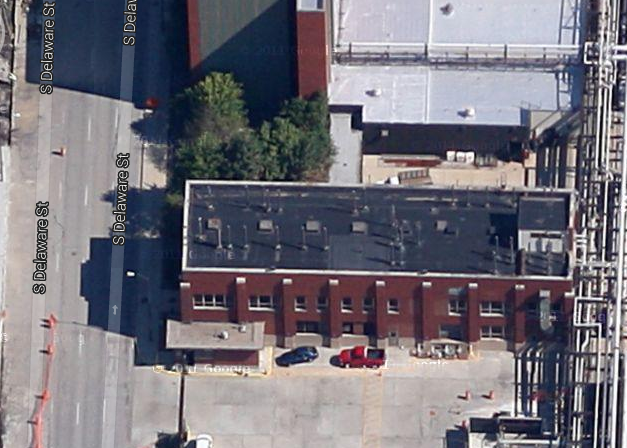
Thanks to Google Maps and other satellite mapping programs, you can now zoom in and do a 360-degree pan of the area. While it doesn’t allow you to peek inside the windows, you can stroll through a neighborhood in Paris, London, or Peoria for free.

For interior scenes, you can find images through internet search engines. You can find examples of log cabins, Victorian parlors, industrial warehouses, and suburban homes. Tourist sites and real estate sites offer visual tours.

For my current project I needed a Victorian stage and the exterior and interior of a Victorian manor house. Some tours of stately homes offered floor plans. I will create a fictional manor house utilizing the rich details I discovered.

By zooming along England’s coast I found the town of Graves End. Perfect location name for a mystery and close enough to London that my investigators could easily go there by coach. A little more digging and I found it was on the coach line and had people arriving from London several times a day. Of course, Google maps shows a very modern Graves End, but I did find an early map of it as well as illustrations.

Sadly, I cannot afford to go to Graves End and I’d need the Tardis to return to Victorian times. I’ll have to settle for imagining the way it smells and sounds and the way it might have been. But if I hadn’t been scouting for locations, I would never have known it was there.

Top 5 Things That Bore Me


As I watched yet another body count trend upward in a recent movie, it inspired me to list the top five things that bore me as a viewer/reader. These clichéd and overused tropes are supposed to wow, but leave me snoring. This list applies to fiction as well as movies.


1) Gratuitous sex scenes, aka sex with a stranger.


It’s stupid. Why should I care? The encounter between two people who truly long for each other, who have been kept apart then finally come together, is far more intriguing. Couples who have a history that reunite or make up are more interesting than random rutters.

2) Random violence.

Killing one character I've grown invested in is more compelling than blasting away with an automatic weapon downing characters I don’t know or care about. It's a fact of human nature that genocide in a distant land doesn't register until the battle is brought to a person's front door. The closer the character who dies is to the protagonist, the higher the story stakes. As much as I love cozy mysteries, there's almost a disconnect when it comes to the victims. The best cozy mystery makes me care that the victim died.

3) Gore.

It’s a turn off. As much as I appreciate special effects makeup artists, they can use their talents to make cooler effects that don’t involve rolling heads or spurting arteries. In books, I really don’t need paragraphs of gruesome details. I scan past them. Same with torture and battle scenes. They make me cringe. I'm a grown-up. I have experienced loss and pain. I get the drift. The reality that people are bestial and kill each other is disgusting and horrifying enough. We never followed Anne Frank to the concentration camp, but the reality of the horror of that story scarred me for life. Why? Because I grew to know and like her and that made what she went through personal rather than abstract. If you want to impress upon your readers true horror, make it personal.

4) Drawn out panoramic shots.

Whether it’s a prolonged movie clip or endless paragraphs describing the setting in excessive detail, I have a tendency to fast forward or skim read past them. Take a picture; it lasts longer. Have you ever sat through an endless slideshow of someone else's vacation? Make description short and make it count, then move on to the point of the scene. It's even better if the setting has an impact on the scene.

5) Adults or teens that behave like out of control toddlers.

Book or movie, I have no patience with these characters. I wouldn't hang out with them in person. I don't waste page time with them either. If this character is the protagonist, I put the book down and it goes on my discard pile.

What tropes inspire you to flip pages or quit reading?